Bogota neighbourhood guide
Chapinero Alto, Bogotá: where the city eats, drinks and goes out
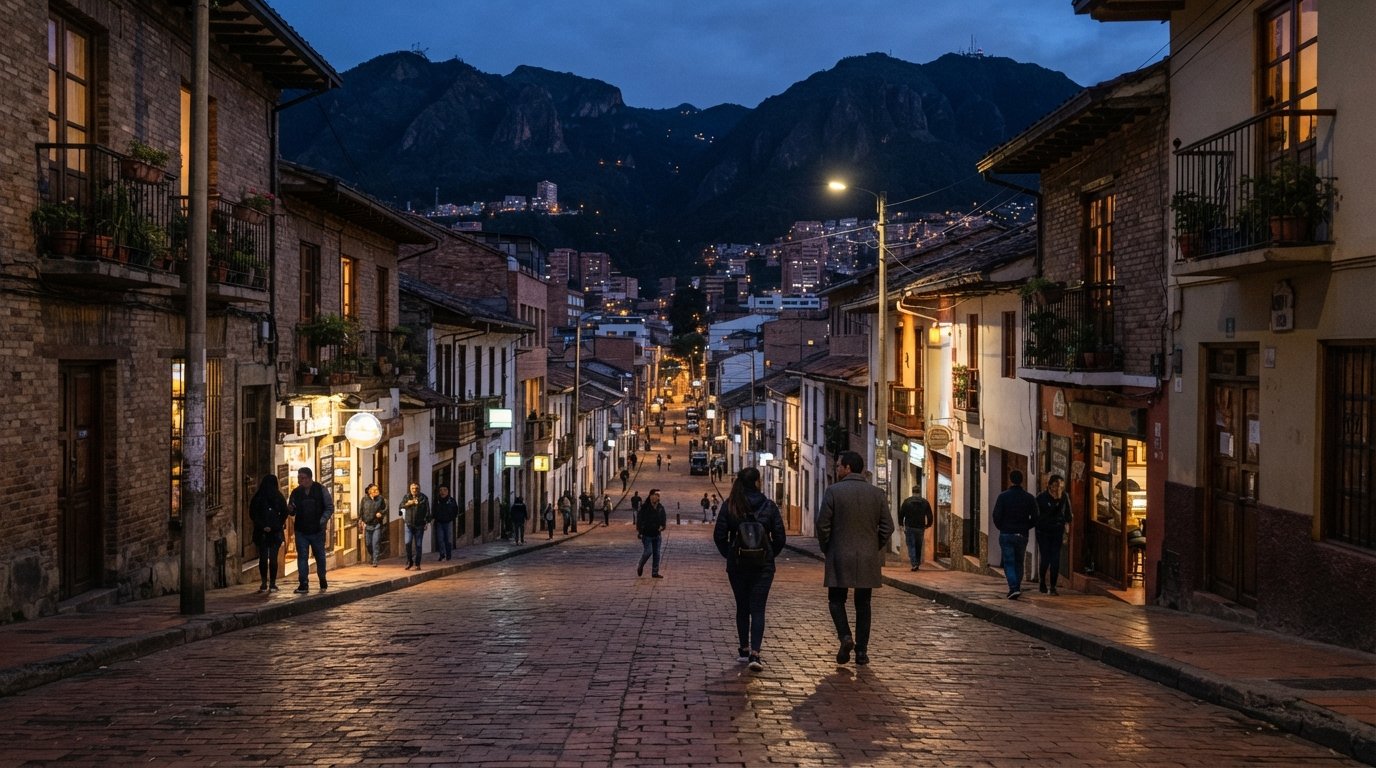
On a steep, red-brick slope above Bogotá’s centre, Chapinero Alto has become the city’s most compelling place to eat, drink, dance and linger over coffee.
Álvaro Clavijo opened El Chato on Calle 65 with his savings in 2017. Eight years later, in December 2025, that small contemporary bistro was named Latin America’s number one restaurant. The fact that this happened on a leafy uphill block in Chapinero Alto — not in some polished enclave with a concierge and a valet — tells you almost everything. This is Bogotá’s working engine of taste and appetite: coffee labs, natural-wine bars, queer nightlife, bakeries that smell like butter at 8 a.m., and kitchens ambitious enough to make the rest of the city drive uphill for dinner.
What Chapinero Alto is known for
Chapinero Alto is the upper, arty half of Chapinero, and the word alto matters. It means higher, closer to the eastern hills, and the good stuff does seem to cluster as the streets climb. The neighbourhood is built from steep blocks and red-brick houses, many of them 1940s family homes now repurposed into coffee counters, design studios, tasting-menu restaurants and bars that don’t bother pretending to be anything other than busy. It is very Bogotá and not remotely shy about it.
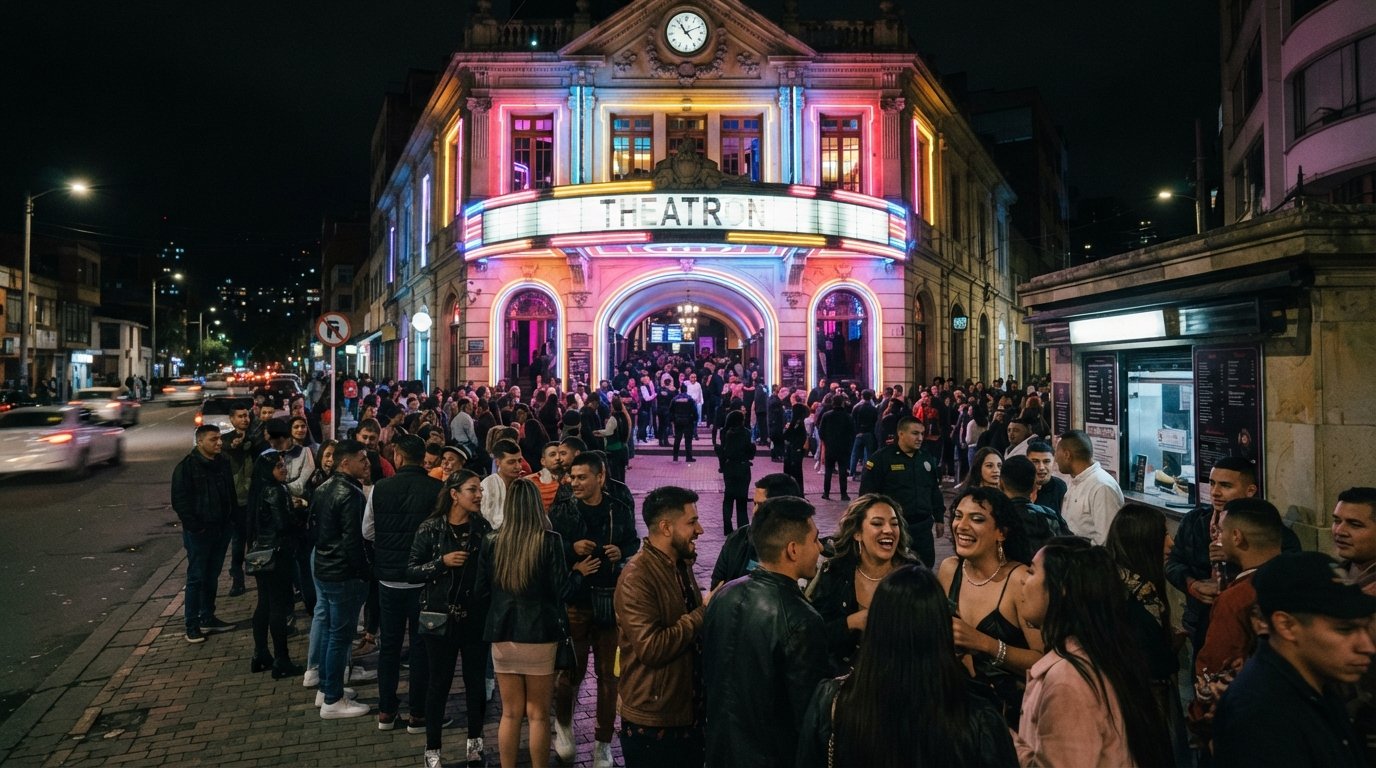
Two forces define it. The first is food. El Chato on Calle 65 is the neighbourhood’s trophy, but not its whole personality. A few blocks away sits Salvo Patria, also on the Latin America 50 Best list, in a renovated house beside Parque Portugal. And between those two poles, Chapinero Alto has built a dense little republic of roasters, bakers and dining rooms that would be the pride of a much larger city. The second force is freedom. This is the core of Bogotá’s LGBTQ+ scene, the city’s unofficial zona rosa gay, centred on Carrera 7 between roughly Calles 53 and 63 and anchored by Theatron, the nightclub that likes to be called the largest gay club in Latin America because, on the evidence of the crowds, it can get away with it.
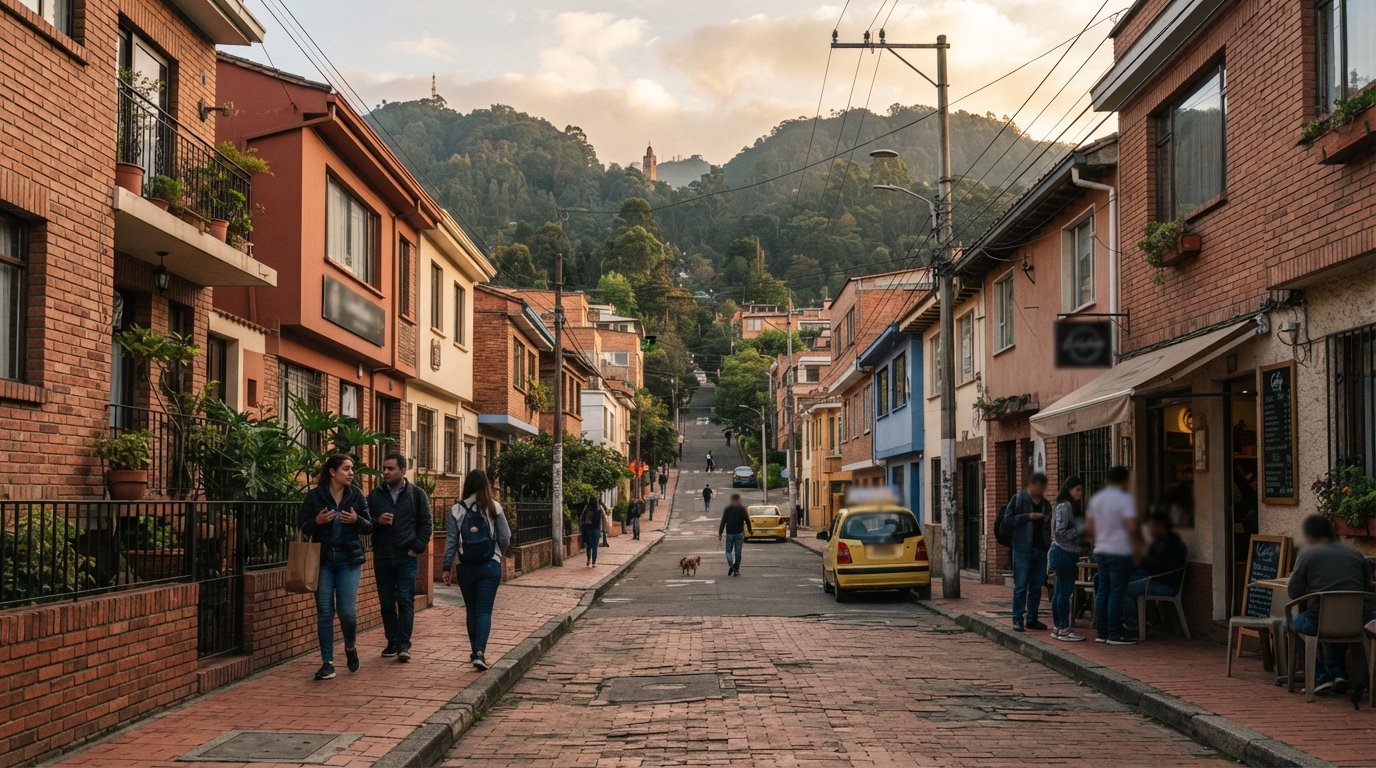
The district’s energy is not polished; it is alive. You hear it before you see it — espresso machines hissing, reggaetón leaking from a first-floor bar, somebody practising a set list through an open window, a burst of laughter from a terrace where nobody is in a hurry to leave. Students, chefs on their day off, digital nomads on their third flat white, and a large visible LGBTQ+ community all share the same sidewalks. Chapinero Alto is one of the few parts of Bogotá that feels walkable in a city that often does not, though the gradient will remind you that 2,600 metres is not a metaphor.
There is grit at the edges, especially toward Avenida Caracas, where the lower streets get scruffier and deserve more care after dark. But the core of the neighbourhood is confident, creative and a little bohemian. It would rather be interesting than tidy, which is usually how the best parts of a city behave.
Where to eat & drink
If Bogotá has a dining neighbourhood that can make a serious case for itself without raising its voice, it is this one. Start with El Chato, where Álvaro Clavijo’s contemporary Colombian bistro on Calle 65 earned the title of Latin America’s best restaurant in 2025. Clavijo trained at Per Se, L’Atelier de Joël Robuchon and Noma, and the tasting menu brings that discipline back home to Colombia’s ingredients and producers. It is the sort of room that makes a city sit up a little straighter.
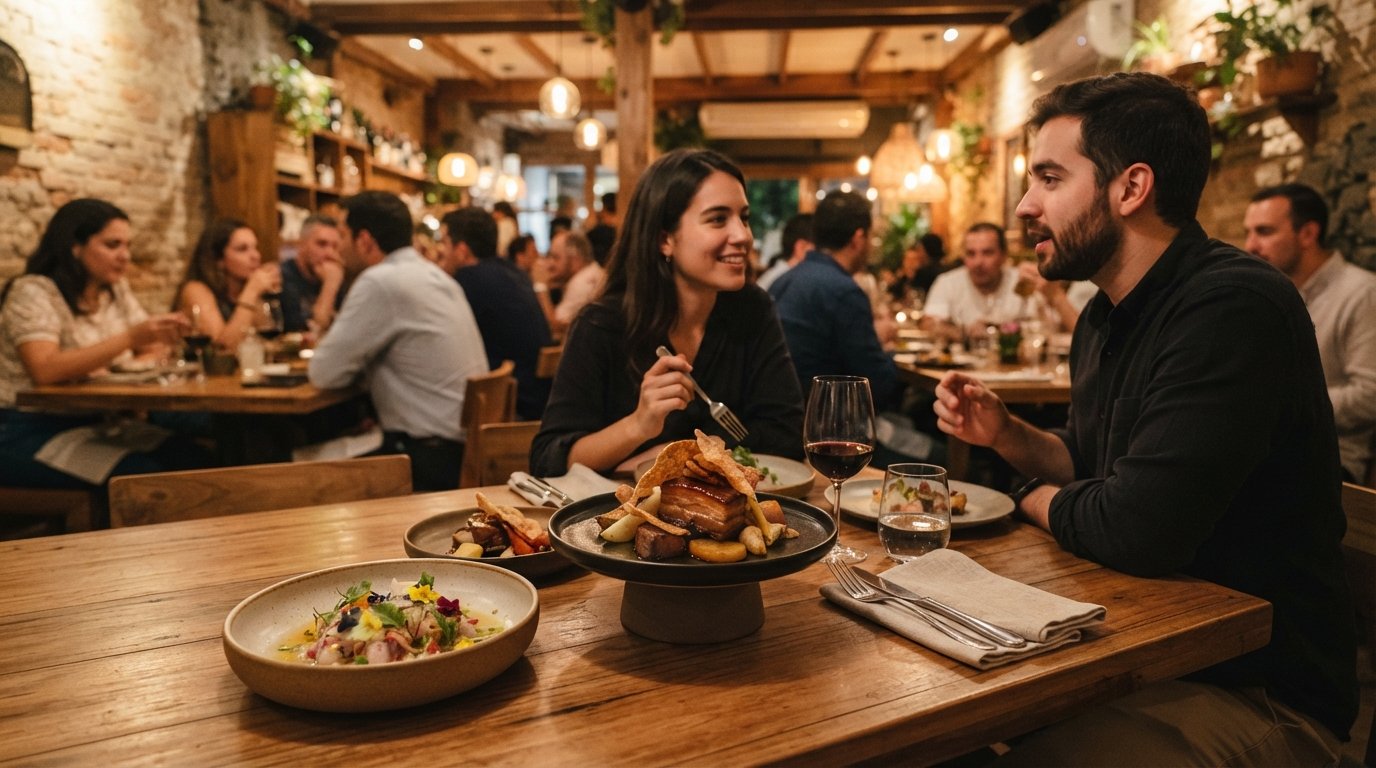
Just as beloved, and easier to get into, is Salvo Patria on Carrera 4 Bis #58-60, beside Parque Portugal. It lives in a renovated house and cooks seasonally, with a share-the-table spirit and a firm hand on native vegetables and small suppliers. The milhoja dessert is a fixture, which is the sort of detail that tells you a place knows exactly what it is doing.
For something looser, Mesa Franca is where inventive Colombian small plates meet a cocktail list that deserves its own address. The drinks lean on local ingredients, including sour-guava-infused gin, and the bar draws as much of a crowd as the kitchen. That is not an accident. In Chapinero Alto, the line between dinner and the first hour of the night is beautifully blurred.
Then there is Cacio & Pepe, the reliable Italian answer to a neighbourhood full of ambition. It is the place for handmade pasta, its namesake spaghetti and a proper pizza, no theatre required. Sometimes that is exactly what the evening needs: a plate that arrives with no speech attached.
Mornings belong to El Árbol del Pan on Calle 66 Bis #4-63, where sourdough, croissants and almojábanas come from a starter the owner has kept alive for years. The bakery is proof that Chapinero Alto understands the value of a good morning as well as a good dinner. Nearby, the coffee scene takes over with almost missionary zeal.
Wash a long lunch down at Bogotá Beer Company, the local craft-brewery chain you’ll find every few blocks, or head to Statua Rota, a laid-back taproom pouring its own artisan beers in generous 500ml glasses. The latter has the more neighbourhood feel; the former has the advantage of being very easy to find when you are thirsty.
Going out
Nightlife in Chapinero Alto runs on two engines: the LGBTQ+ scene and the electronic-and-cocktail circuit. Plenty of nights blur the two, which is part of the charm. The landmark is Theatron on Calle 58 #10-18, a former theatre converted in 2002 into a warren of themed rooms — electronic, pop, reggaetón, salsa, crossover — that is routinely called the biggest gay club in Latin America. On Saturday nights there is a drag show in the main hall, and the place fills with thousands of people spread across its dance floors. It runs Thursday to Saturday, with Saturday as the full experience, and the cover often includes an open bar, so pace yourself or you will learn the hard way why Bogotá’s nights are a marathon.
Around it are the smaller, warmer queer bars that give the area its texture. Estación Café blends bar and cabaret with live performance and late dancing. El Perro y la Calandria does karaoke and drag to Latin hits. Leos Bar Mística stacks drag, ranchera and tropical beats across several floors. These are not places that ask you to dress like a concept. They ask you to show up and join in.
For a different tempo, Video Club is the neighbourhood’s serious dance club, a renovated warehouse with an industrial feel, techno and house in the main room, and Latin beats on the smaller floor. It draws a mixed, up-for-it crowd and has the kind of sound system that makes small talk seem like a foolish ambition.
The cocktail bars carry the earlier hours, especially Mesa Franca, which works as a restaurant-bar rather than a strict prelude to something else. Weekends fill fast, so arrive early at the clubs. Chapinero Alto is generous, but it is not patient.
Things to do
The single best thing to do in Chapinero Alto is drink its coffee, because this is where Colombian specialty coffee grew up. Amor Perfecto on Carrera 4 #66-46 is the country’s first specialty roaster, going back to the mid-1990s, and its glass-walled Café Lab in the back is where cuppings and barista courses happen in Spanish and English. It is one of those places that made a national habit feel modern before the rest of the country had caught up.
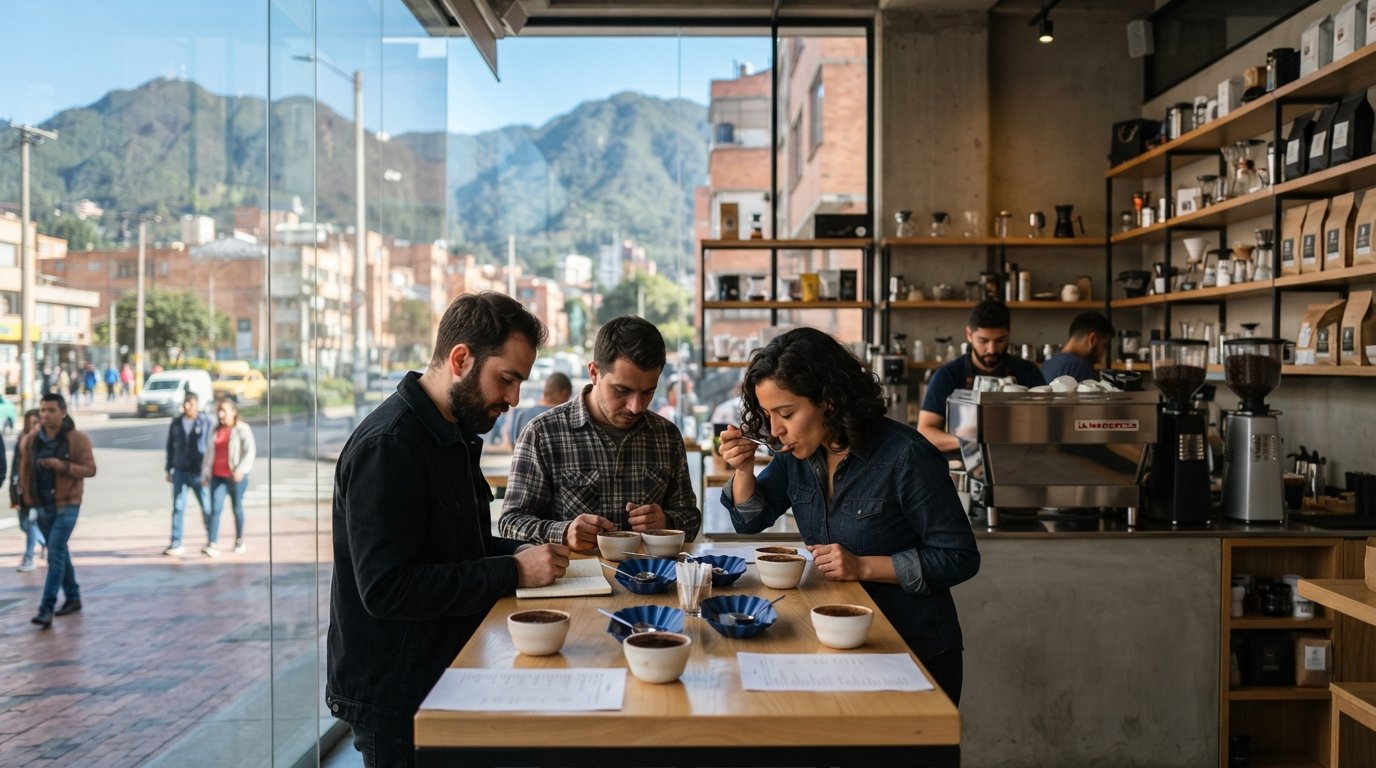
At Catación Pública on Calle 70a #5-71, the coffee goes from good to instructive. It is part café, part working laboratory, and many of Bogotá’s baristas train there under a Q-grader who spent two decades with the Colombian coffee federation. Book a tasting and you will leave able to describe what you are drinking instead of simply insisting that it is “nice”.
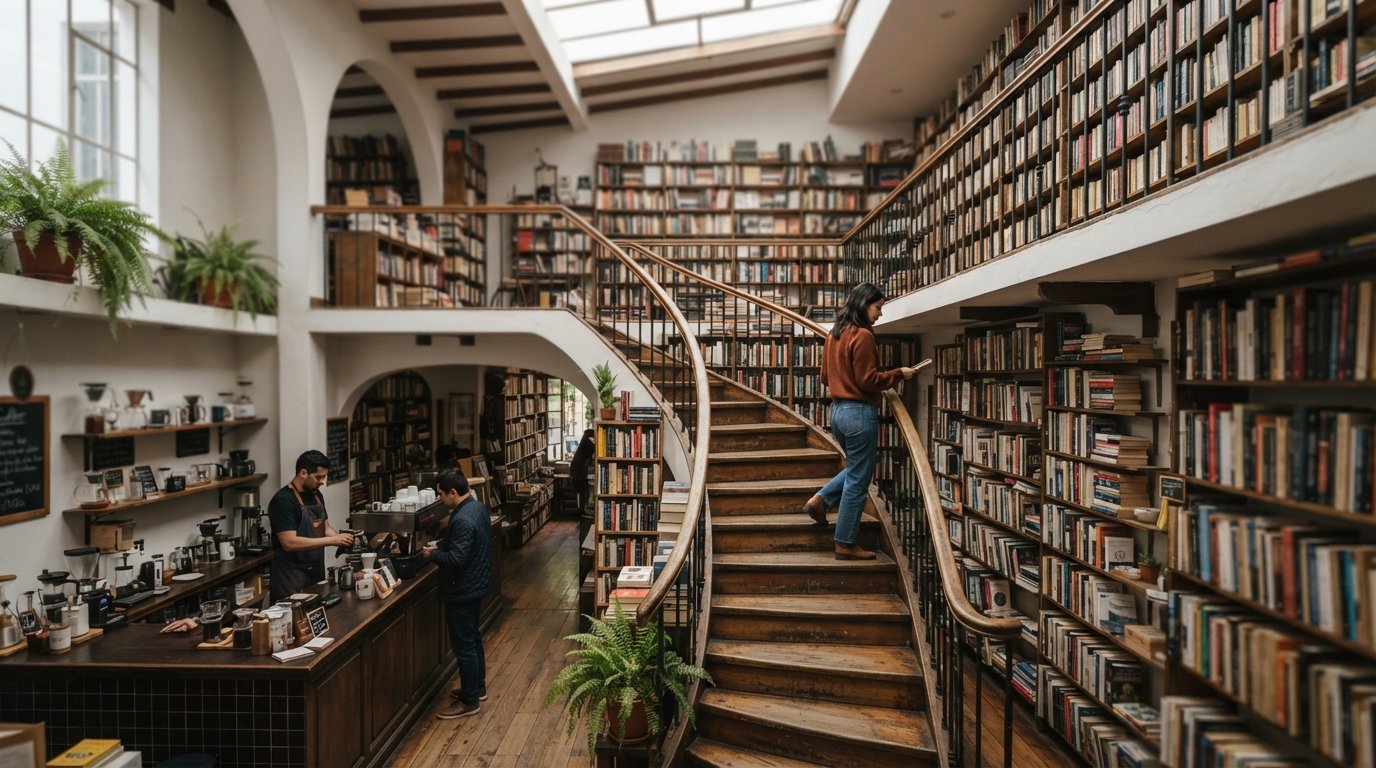
Café Cultor is another essential stop, especially because its home inside Librería Wilborada 1047 feels so perfectly Chapinero Alto it could have been designed by the neighbourhood itself. Wilborada is a three-storey independent bookshop in a preserved 1943 house, with talks, reading clubs and a strong sense that books are still meant to be handled by human beings. Café Cultor sits inside, and the pairing of good coffee and good books under one timber-framed roof is about as on-brand as a district can get.
If you want to chase the city’s roasting talent further, Azahar Coffee is the other name worth knowing, thanks to its direct-trade sourcing and competition-winning baristas. It is the sort of café that reminds you specialty coffee can still be both precise and welcoming, which is rarer than it should be.
Beyond the cup, wander the brick streets reading the murals and browsing the design and second-hand shops tucked into ground floors and courtyards. Then stop at Parque de los Hippies at Carrera 7 and Calle 60, a relaxed, tolerant green square that has long been a gathering point for students, activists and the LGBTQ+ community, and a hub of Pride-season events each June. It is not a grand park and that is precisely the point; it belongs to the city by use, not proclamation.
Don’t miss in Chapinero Alto
The independent cafes and bakeries along Calle 65
The progressive dining spots of the 'Chapiyork' micro-neighborhood
Stunning views over the city basin from the upper streets
Shopping & markets
Shopping in Chapinero Alto is small-scale and independent rather than mall-driven, which suits a district of converted houses and improvised creativity. The anchor is Librería Wilborada 1047, where the selection runs from literature and poetry to art, gastronomy and children’s titles, and the staff actually seem to have read the books they are recommending. That alone puts it in a different category from the average city bookshop, where the shelves are often more aspirational than informed.
Around the coffee roasters you will find design studios, ceramics, slow-fashion boutiques and vintage or second-hand clothing shops that fit the neighbourhood’s student-bohemian streak. Concept stores selling handmade Colombian jewellery and homeware turn up on the side streets off Carrera 4 and 6. The pleasure is in the browsing, not the big reveal.
The bakeries do double duty as edible souvenirs. El Árbol del Pan is the obvious stop if you want artisan bread or pastries to carry home, and the coffee roasters all sell beans to take away, which may be the most practical and most truthful souvenir Bogotá offers. If you want something glossier, the polished north and Zona T are a short taxi ride away. But that is not really the point here. Chapinero Alto rewards the person who looks up from the obvious and into the side streets.
Where to stay in Chapinero Alto
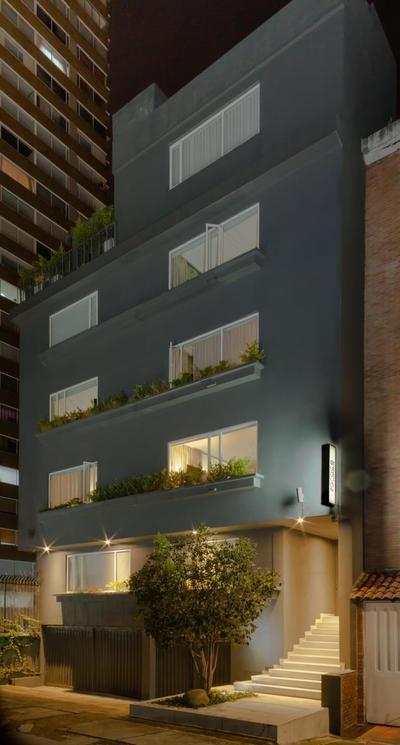
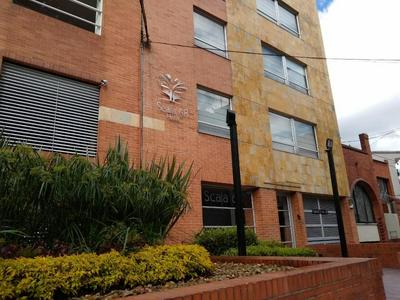
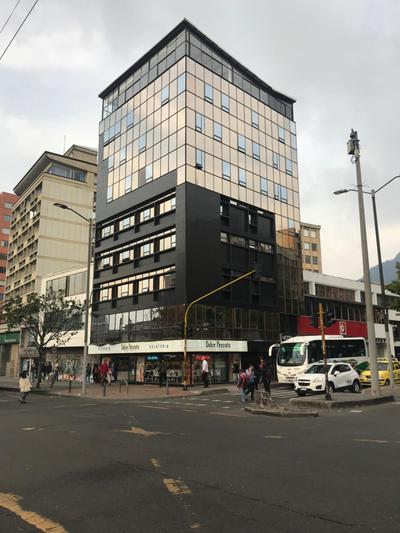
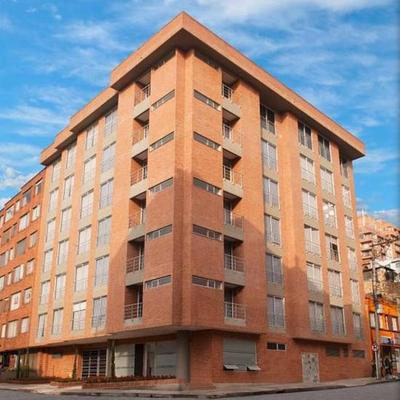
Chapinero Alto suits travellers who want to eat, drink and go out on foot, and who value local character over five-star polish. Expect boutique hotels, guesthouses and apart-hotels rather than big international chains, with prices that undercut the smart north. The best base is in the upper streets toward the hills, roughly east of Carrera 7 around Calles 57 to 66, where the blocks are leafier, safer and closer to the best coffee and restaurants while still being an easy walk to nightlife.
Streets right on the bar-and-club strip near Carrera 7 and around Theatron are the most convenient for a night out, but also the loudest, so ask for a room off the street if you sleep lightly. Be more cautious on the western and lower edges toward Avenida Caracas, which get scruffier and are best skipped on foot after dark.
Where to stay here
Hotels in Chapinero Alto
Our best-rated stays in this neighbourhood. Prices are approximate “from” rates — confirmed at the provider when you continue. We may earn a commission if you book through our partners — at no extra cost to you.
 In this area
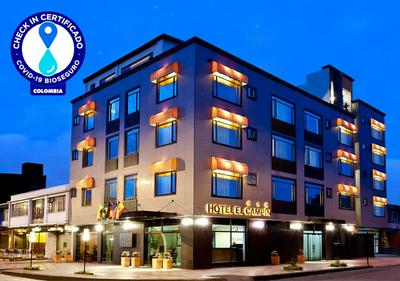 In this area
 In this area
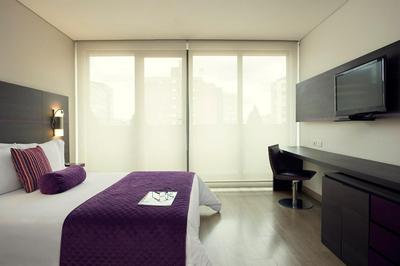 In this area
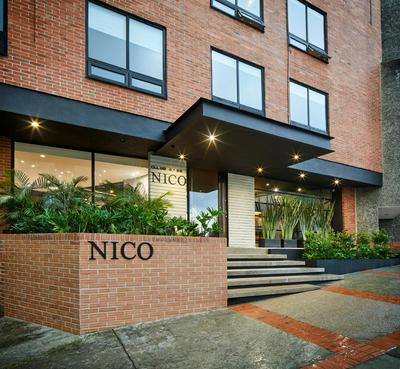 In this area
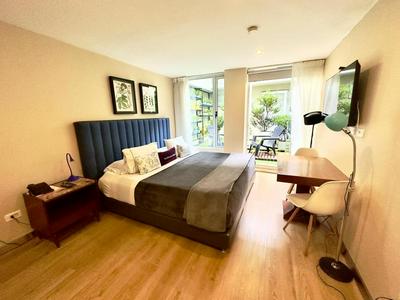 In this area
 In this area
 In this area
 In this area
 In this area
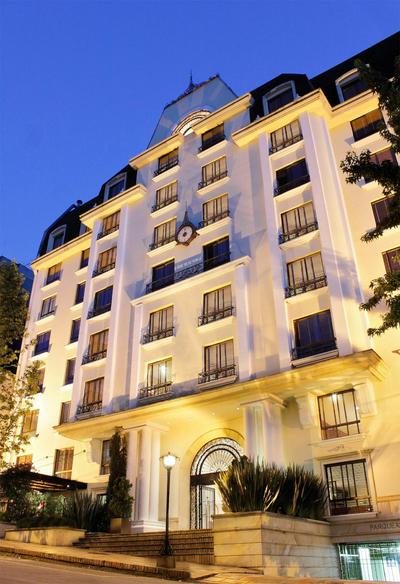
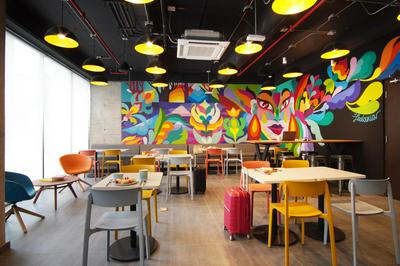
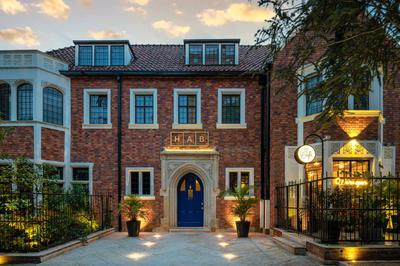
Hemma Bogotá Chapinero Premium Suites Hotel
 In this area
 In this area
Getting around
Chapinero Alto is one of the more walkable parts of Bogotá, with most restaurants, cafés and bars sitting within a compact grid of brick streets. But this is still a city at around 2,600 metres, and the neighbourhood climbs steeply east toward the hills, so those uphill blocks will let you know you are not at sea level anymore. It is a pleasant workout until it is not.
The TransMilenio bus-rapid-transit network runs up Avenida Caracas on the western edge, with stations serving the Chapinero corridor, and a temporary Marly/Flores arrangement has been in place during 2025 works. That puts the historic centre and the north within a straightforward ride. For most short hops, though, walking or a ride-hailing app is easier and cheaper than navigating the bus system, and it avoids the crowded Caracas corridor at night.
La Candelaria and the historic centre are roughly 15–25 minutes away by taxi depending on traffic. El Dorado International Airport is about 30–50 minutes west, so allow plenty of time in Bogotá’s heavy traffic. At night, use a ride-hailing app or an official taxi rather than walking the lower, quieter streets. Bogotá is a city that repays good judgement generously.
Good to know
Chapinero Alto — your questions
Is Chapinero Alto a good area to stay in Bogotá?
Yes — especially if you’re coming for food, coffee and nightlife rather than the historic sights. It has Bogotá’s best dining, founding specialty roasters, a strong craft-beer scene and the city’s main LGBTQ+ nightlife, all with good walkability. Stay in the upper streets east of Carrera 7 and it’s a very strong base.
Is Chapinero Alto safe for tourists?
The upper streets are lively and generally safe by day and into the evening, and most visitors walk them without trouble. As anywhere in Bogotá, keep valuables discreet and be more careful on the lower and western streets toward Avenida Caracas after dark. At night, take a ride-hailing app or official taxi.
Why is Chapinero known as Bogotá’s gay neighbourhood?
Chapinero, and Chapinero Alto in particular, has been the centre of Bogotá’s LGBTQ+ life for decades. The scene runs along Carrera 7 roughly between Calles 53 and 63, with Theatron at its core, plus queer bars and Pride-season events around Parque de los Hippies.
What is Chapinero Alto best known for?
It’s best known for specialty coffee, top-tier restaurants, craft beer and LGBTQ+ nightlife. It’s also one of Bogotá’s most creative neighbourhoods, with independent bookshops, design stores and a strong bohemian feel.
Gallery