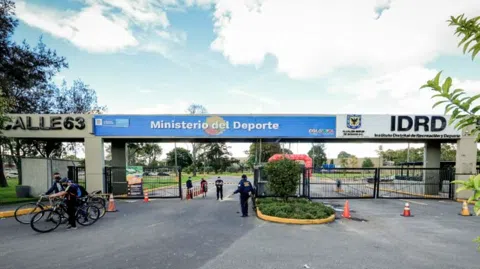
Bogota-numret
Four Halls of Gold Inside Bogota's Museo del Oro
The world's largest pre-Hispanic goldwork collection is two floors up on Parque Santander, and the architecture that fills the rest of your day is within four blocks of the door.
Av Élodie MarchandA Bogotá weekend that respects the altitude
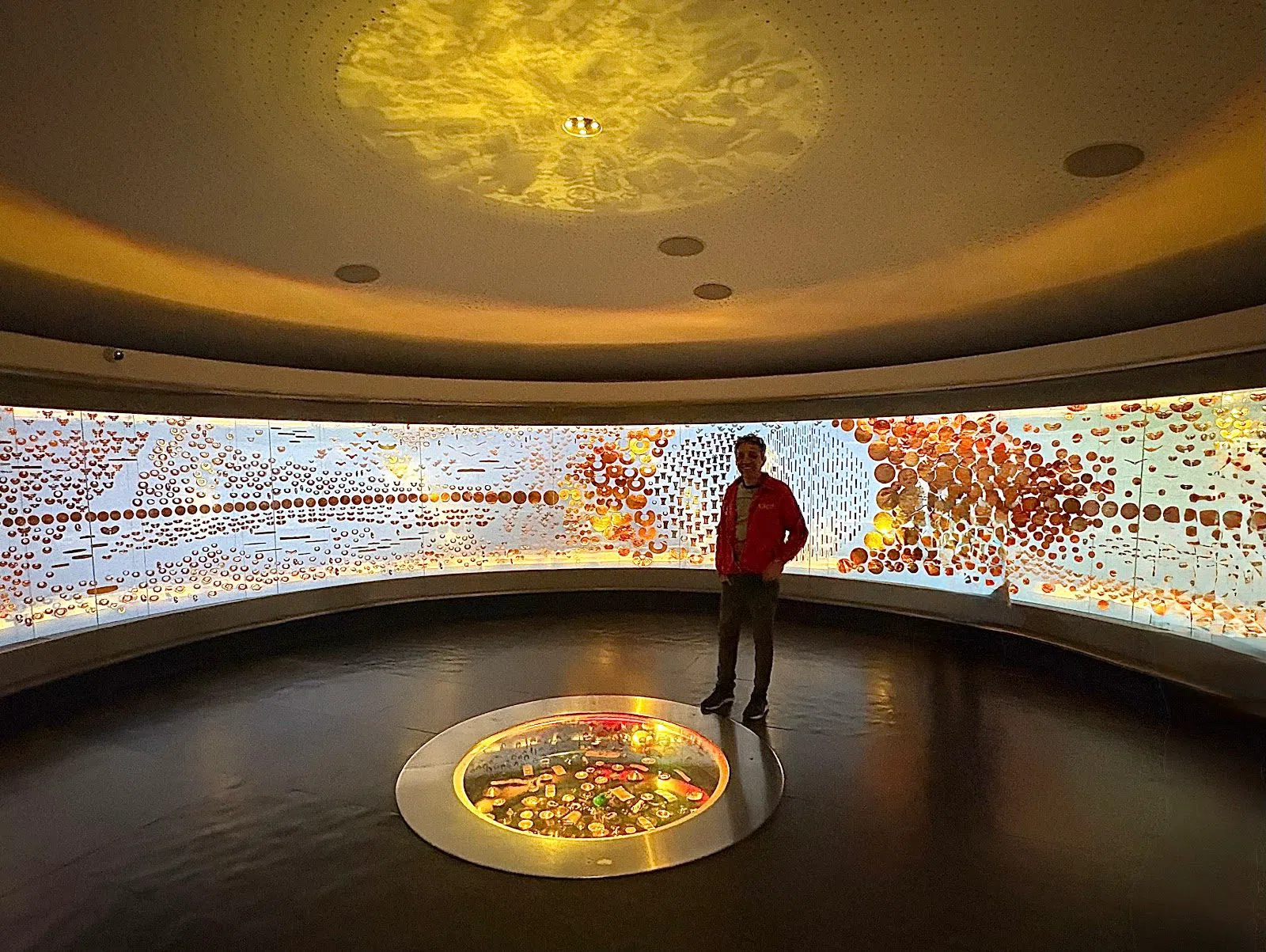
The gold sits two floors up in a 1960s-modernist Banco de la Republica block on the corner of Parque Santander. More than 34,000 pieces fill four permanent halls, and every label is written in Spanish and English. Free guided tours run in both languages, and you can book them online or at the desk.
What the four gold halls hold
Museo del Oro (Parque Santander) holds the world's largest pre-Hispanic goldwork collection, laid out across four permanent halls on floors 2 and 3. The rooms are dark and built around vitrines, with thousands of small gold tunjos and nose ornaments backlit in black glass cases, so the walking is slow and the reading is close.

The sequence ends in the Offering room, a circular blacked-out space that fills with gold light around the Muisca raft. The bilingual labels run through every floor, which is why the halls work without a guide.
Individual halls shut intermittently for ongoing renovation. Check the day before you come, because the hall you want may be the closed one.
Planera din resa till Bogota
Aktuella priser från våra bokningspartner.
Gratis avbokning på många rum. Vi kan få provision när du bokar.
What you pay and how the tours work
Entry is COP $21,000 for foreign tourists and COP $10,000 for Colombian nationals and residents. Students pay COP $5,000. Under-12s and over-62s go in free, and so does everyone on Sunday. Take the Sunday ticket only if you can tolerate the free-day crowd.
Large groups should call ahead and spread themselves across entry slots. Guided tours of the centre run every day of the week and book up steadily, so reserve a few days out, and check the museum's own closed day before you fix a date.
Architecture within four blocks
Teatro Colon is the best architecture visit near the museum, now run by the Centro Nacional de las Artes Delia Zapata Olivella. Tours restarted in January 2026, run on weekend slots and last 75 minutes backstage and in the boxes. A public tour costs COP $12,000 per person, and you book through the official site rather than at the door. Pietro Cantini's facade is carved stone with Tuscan-Doric columns and two cornices. Inside, gilded boxes curve into a horseshoe under a painted ceiling, and the route takes in the red-curtained stage and the dressing rooms.


Biblioteca Luis Angel Arango (Candelaria) is a declared national heritage building and an architecture-tour stop in its own right, red brick stacked six floors into the hillside. The 1966 design won awards and covers 45,000 m2. Public access is free, and the double-height reading rooms are open to anyone who walks in. On Wednesdays at 7:30 p.m. the fan-shaped hall, with a pipe organ behind the stage, runs a concert series with good acoustics. Those tickets are sold separately.
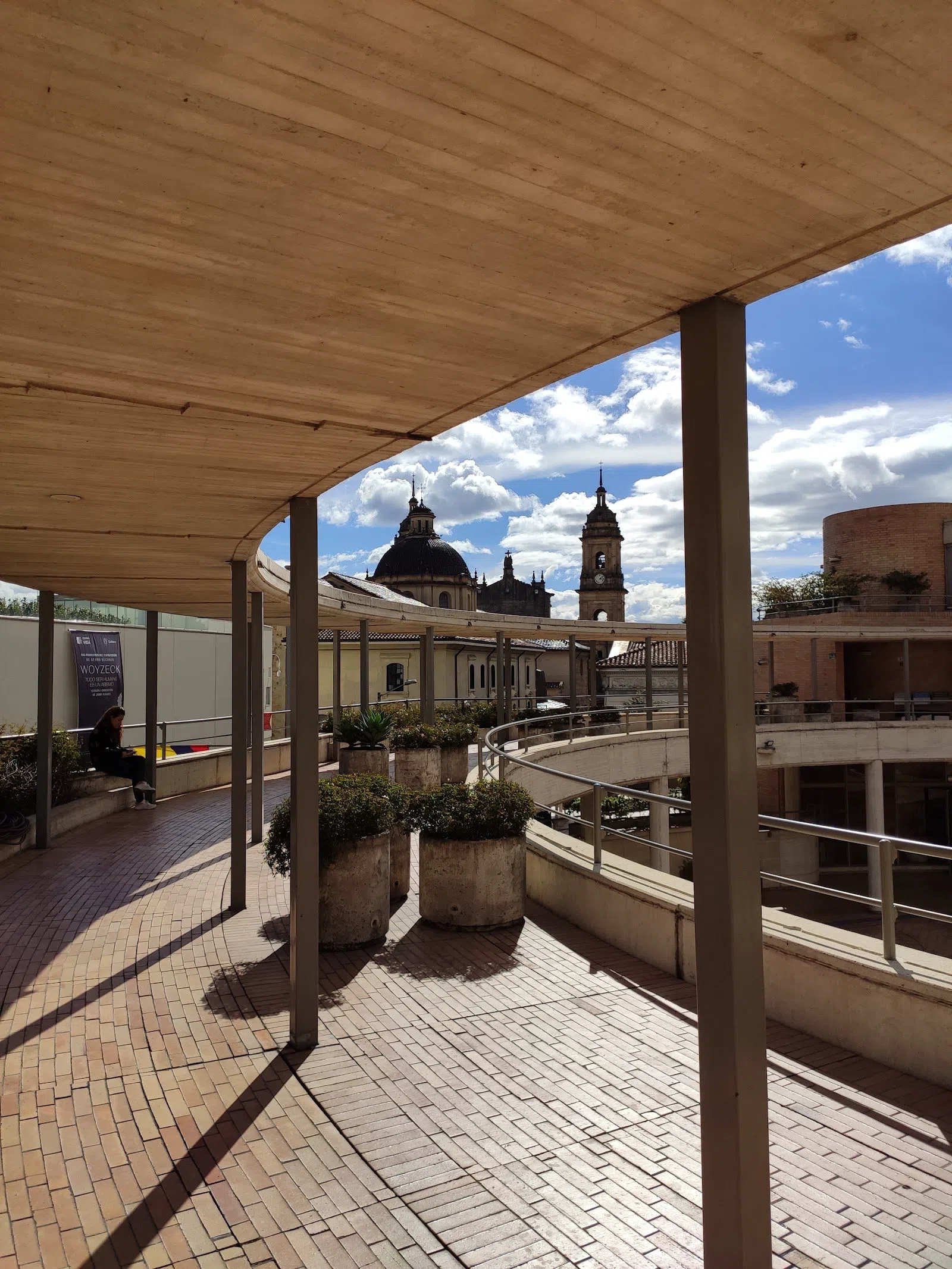
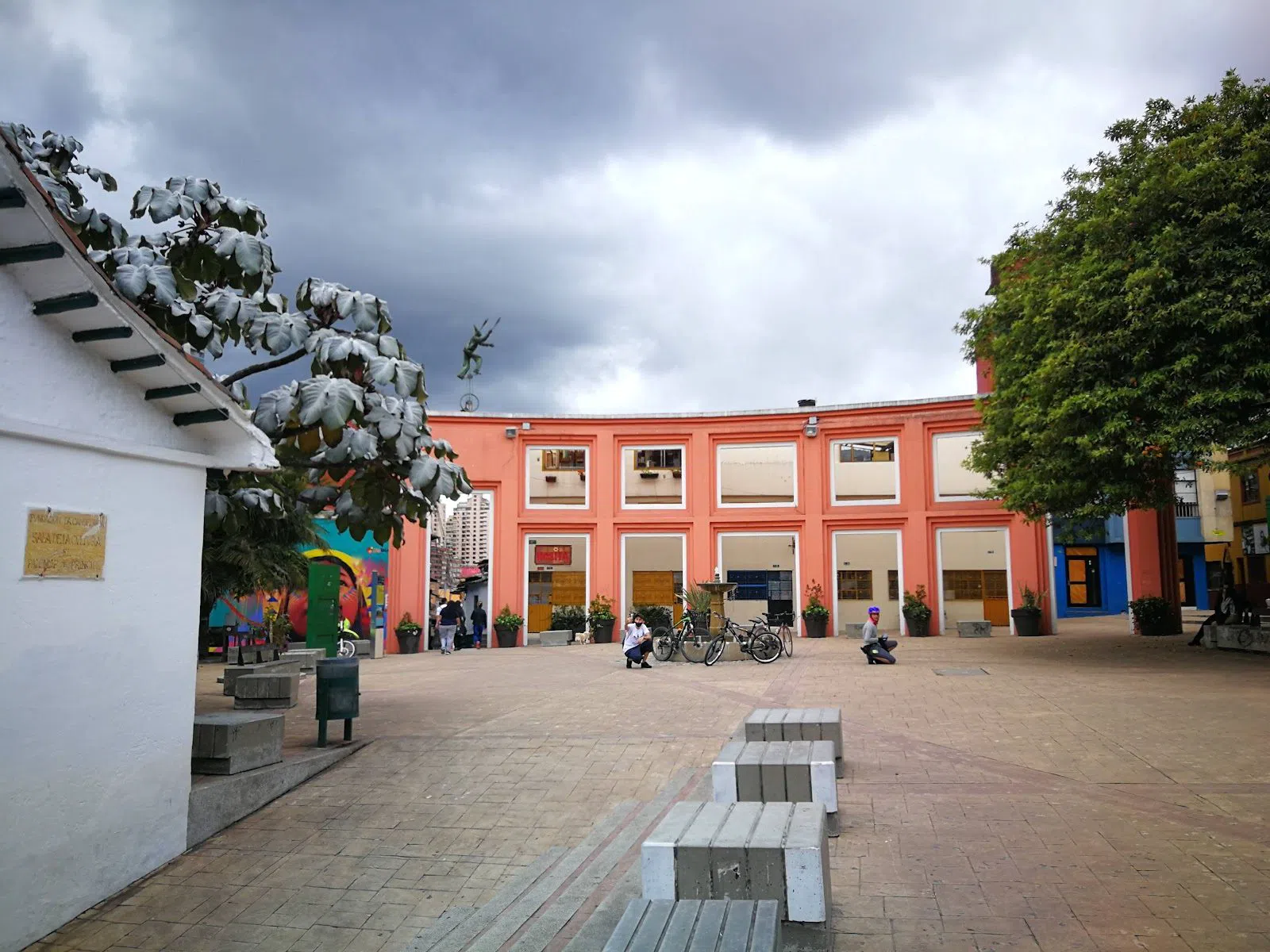
Centro Cultural Gabriel Garcia Marquez (Calle 11) is Rogelio Salmona's last major work and the best modern building in the old town, a curved red-brick drum wrapped around a circular open-air plaza. The Fondo de Cultura Economica bookshop runs a spiral ramp of shelves behind full-height glass, and the Debora Arango exhibition hall is inside. Entry is free, the two auditoriums take bookings for events, and the public roof terrace gives the best free view over Candelaria tiles to the green eastern hills. Put it in the same afternoon as the gold.
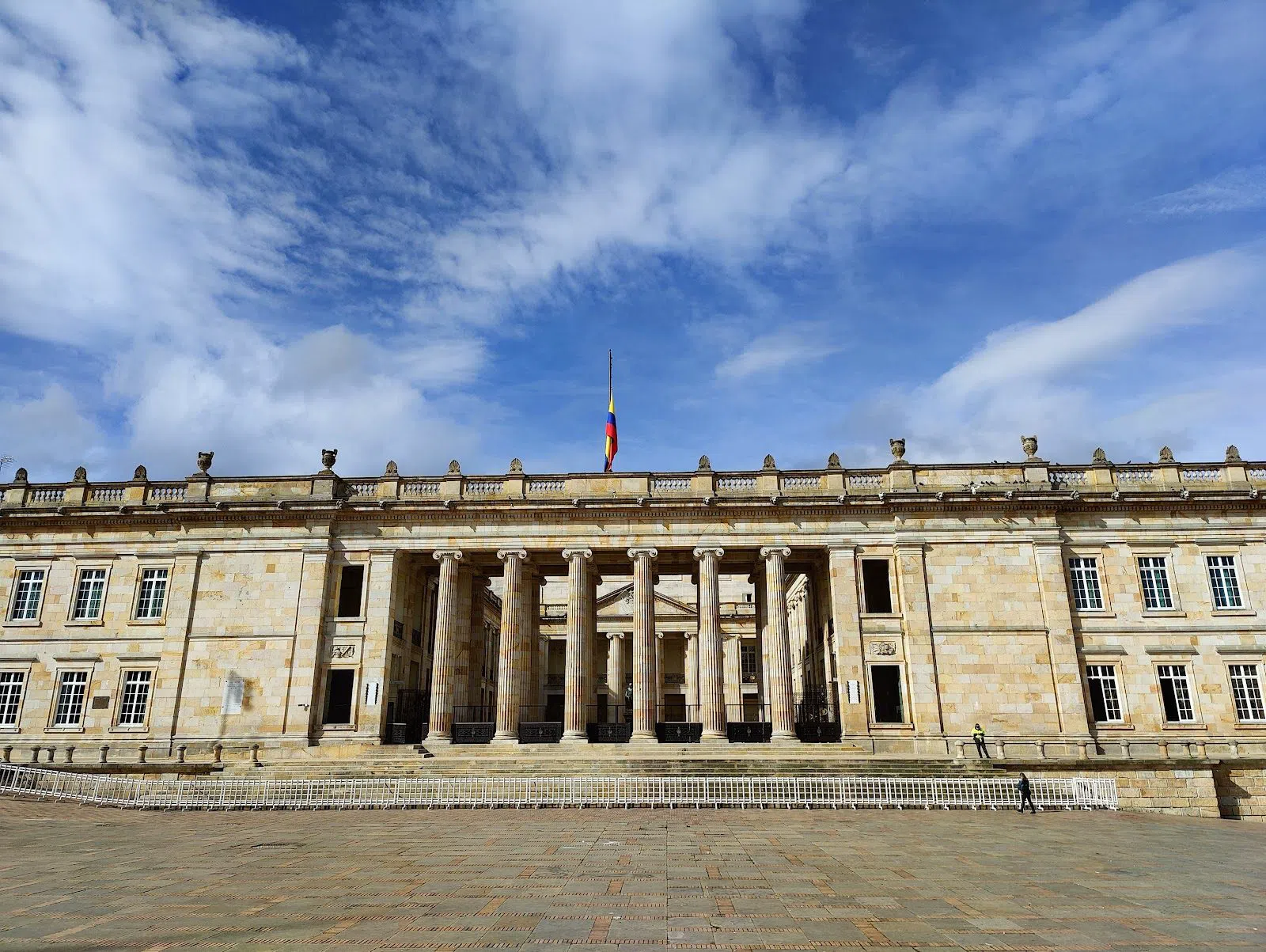
Capitolio Nacional (Plaza de Bolivar) is a free architectural interior few visitors see, because you have to write ahead for it. Free guided visits go to school, university and civil-society groups, 35 people maximum, booked by email or phone in advance, and smart dress is expected. Slots fall on Friday mornings and depend on the Congress diary, so treat the visit as a bonus rather than a fixed plan. Behind the long Greek-revival colonnade are inner courtyards of stacked arcades and the Senate's semicircle of wooden benches under a stained-glass dome.
Catedral Primada de Colombia (Plaza de Bolivar) stands two blocks from the gold, free and open daily from 9 a.m. to 4 p.m. The nave runs barrel-vaulted in cream and gold beneath twin bell towers, and pigeons lift off the flagstones outside. The adjoining Capilla del Sagrario keeps shorter hours. Watch for the occasional ticketed climb inside the north tower, which is the way to see the plaza from above.

Plaza de Bolivar is four blocks south of the museum, free and open at all hours, and it teaches the city's architecture faster than anything else in the centre. Four clashing centuries ring one set of flagstones: the neoclassical cathedral, the Greek-revival Capitolio, the brick-and-concrete Palacio de Justicia and the French-style Palacio Lievano. The bronze Simon Bolivar came out of scaffolding after his 2026 restoration. Llamas and pigeon-feed sellers work the square all day.

Museums that pair with the gold
Museo Botero (Calle 11) is the obvious free pairing, five minutes' walk from the gold, with no ticket and no booking. More than 100 Boteros hang in a whitewashed colonial house around a cloistered courtyard with a stone fountain, alongside the Picasso, Monet and Bacon he donated. A fat bronze hand sits in the patio.

Museo Santa Clara is a 45-minute visit and the finest colonial interior in the centre, recently re-hung and quieter than the Gold Museum at any hour. The single-nave 17th-century convent church has no pews, a barrel vault covered edge to edge in gold-starred polychrome, and more than 100 gilt-framed saints stacked up the walls. Foreign adults pay COP $15,000 and a child ticket for ages 6 to 12 is COP $5,000. Under-6s and over-60s go free, as does everyone on Wednesday afternoons and on the last Sunday of each month. A booked mediator costs COP $2,500 per person, Tuesday to Saturday from the morning to mid-afternoon.


Museo de Bogota - Casa Samano (Carrera 4) gives the context the Gold Museum does not, which is how the Muisca plateau became this city. It is free, takes 40 minutes, and mediated tours run at 11 a.m. and 3 p.m. The rooms of the low whitewashed townhouse, under its green-painted timber balcony, hold maps, photographs and models of the city, with a small tiled patio at the back.
Casa Museo Quinta de Bolivar (Candelaria) sits at the cable-car station end of the district, the Monserrate end. Adults pay COP $6,000. A teenage ticket is COP $4,000 and a child ticket COP $2,000, and under-6s and over-60s go free. Entry costs nothing on Wednesdays from 3 p.m. to 5 p.m. and on the last Sunday of the month. The white country house keeps a long tiled-roof veranda on black timber posts, a walled garden of hydrangeas and eucalyptus, and Bolivar's four-poster bed and campaign desk inside. It is a small house. An hour is plenty.

Coffee and tamal near the museum door
Cafe Pasaje (Plazoleta del Rosario) opened in 1936, two minutes from the museum door, and is the last survivor of the old downtown cafes. The tinto arrives in a white ceramic cup on a saucer, with the sugar bowl carried to the table, on 1930s tiled floors between dark wooden tables where pensioners argue over newspapers. The room is small and takes no bookings. It is scraping by on a high rent.

La Puerta Falsa (Calle 11) has been open since 1816 and is Bogota's oldest restaurant, a block from Plaza de Bolivar. The banana-leaf tamal and the thick chocolate santafereno come with a block of white cheese to drop into the cup, for under COP $40,000. Nobody takes reservations, and the narrow two-storey shopfront holds a handful of stools and a cramped upstairs. Go at 8 a.m. or mid-afternoon, since the breakfast and lunch queues are long.
Chorro de Quevedo is uphill from the museum, reputedly where Bogota was founded in 1538. A small stone chapel closes the top of the sloping cobbled plazoleta, every surrounding wall is painted, and the best street art in the old town is here. Doorways in the alley beside it sell chicha in painted gourds. Keep your phone away, and do not wander those alleys after dark.
The city from above
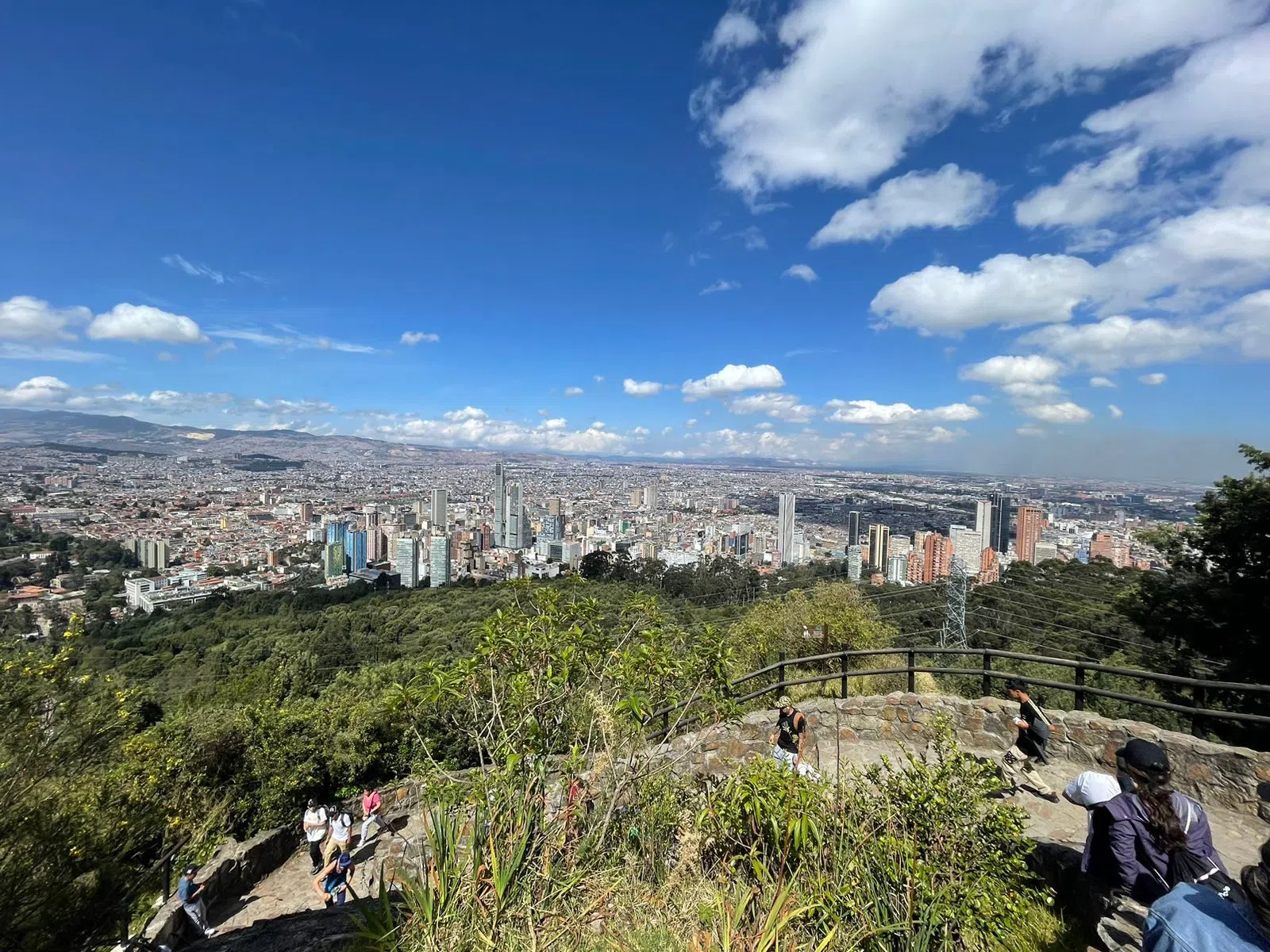
Cerro de Monserrate is a 20-minute taxi from the museum and the city's defining view, a white 17th-century shrine church on a 3,152 m ridge with the brick grid of Bogota laid flat to the horizon from the terrace. The red funicular carriage climbs a rock cutting through cloud forest. Both lines run continuously, and one of the two is often rotated out for maintenance, so check which one is working before you set off. A round trip is COP $35,000 to COP $45,000 depending on the line and the day, and one way is COP $21,000. Over-62s and Sunday travellers pay less, and the pedestrian trail is free. You are climbing to more than 3,000 m. Treat that carefully in your first days at altitude.
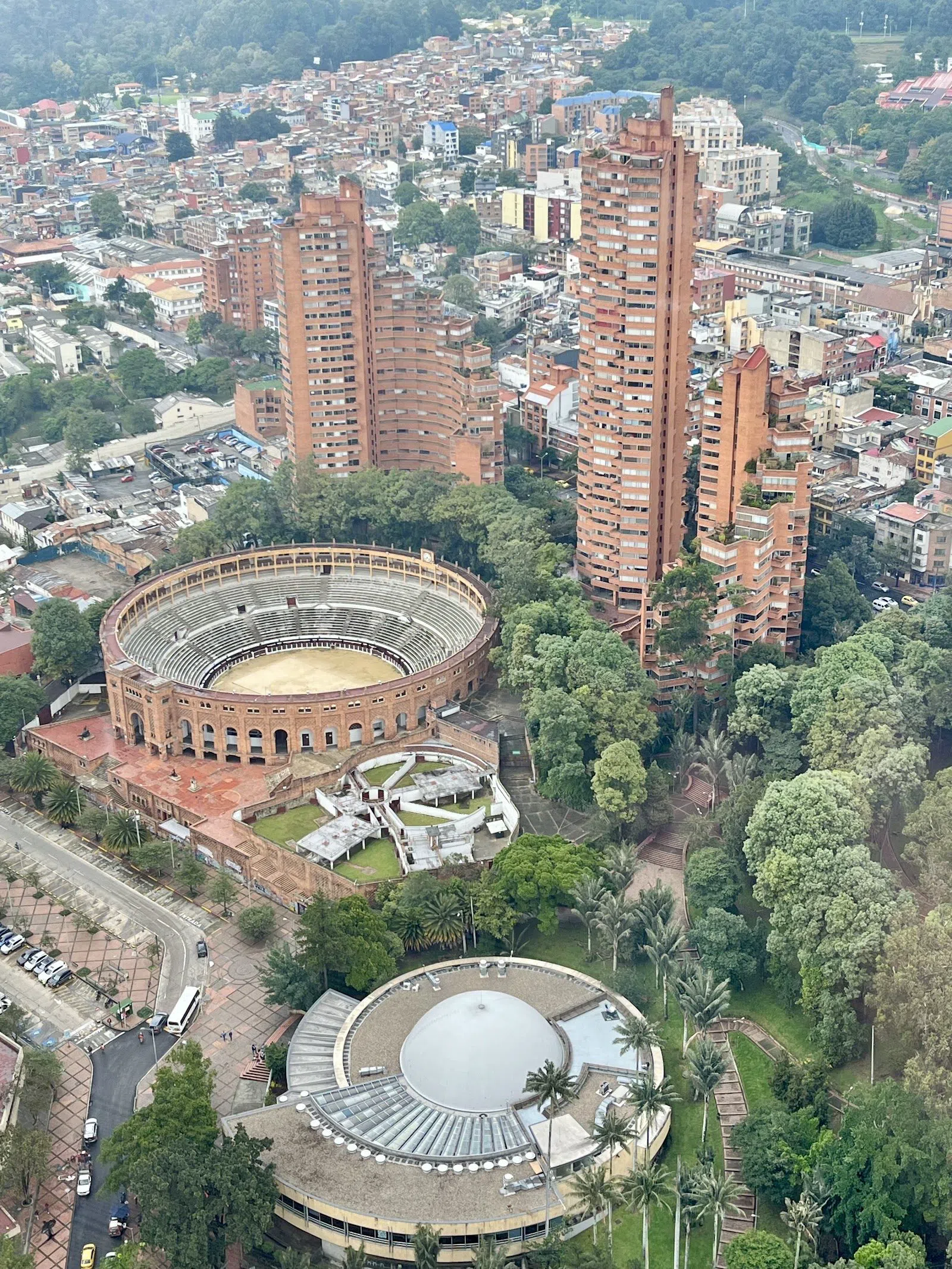
Torre Colpatria mirador (Carrera 7) is a 10-minute walk up from the museum and the only high open-air deck in the centre, floor 48 of a red-lit 1970s slab, 196 m up behind mesh railings. The Candelaria rooftops sit below on one side and Monserrate's lit cross stands level with you on the other. Locals pay COP $35,000 and foreign visitors COP $50,000, which includes a drink or food voucher at the top-floor cafe. You book online for a timed slot.
Is it worth the ticket
The Offering room earns the price by itself: a blacked-out circle, gold light coming up around the Muisca raft. It suits a first visit to the centre, and the bilingual labels mean the halls ask no Spanish of you.
Best time to go
The Gold Museum closes on Mondays, including holiday Mondays, and so does Casa Museo Quinta de Bolivar. Museo Botero closes Tuesdays, and Museo de Bogota closes Tuesdays for cleaning, which is how most people lose a day. The free Monserrate footpath is also shut Tuesdays.
Go up Monserrate in the morning, before the cloud builds. Keep the Torre Colpatria deck for the dusk slot, when the hills light up, and remember it opens Thursday to Sunday and on holidays only. Chorro de Quevedo is for daylight or late afternoon, when the buskers play.
Before you go
Check the day before for hall closures and for which Monserrate line is running, book the Teatro Colon tour through the official site, and email or phone the Capitolio well in advance. See the Bogota guide and the Bogota hotel search.
Innan du åker
How much does the Gold Museum cost?
Entry is COP $21,000 for foreign tourists, COP $10,000 for Colombian nationals and residents and COP $5,000 for students. Under-12s and over-62s go in free, and Sundays are free for everyone.
Which day is the Gold Museum closed?
Mondays, including holiday Mondays. Individual halls also close intermittently for renovation work, so check the day before you go.
Do I need to book a guided tour of the Gold Museum?
Free guided tours run in Spanish and English, bookable online or at the desk, and large groups should call ahead and split across entry slots. Tours of the centre run every day and get booked up, so reserve a few days ahead.
Is Sunday a good day to visit?
Sunday is free for everyone, so the free-day crowd comes with it. Pick Sunday only if you don't mind that.
What should I combine with the Gold Museum?
Museo Botero is five minutes' walk away and free, though it closes Tuesdays. A public tour of Teatro Colon costs COP $12,000 and runs 75 minutes on weekend slots. The roof terrace at the Centro Cultural Gabriel Garcia Marquez is free.