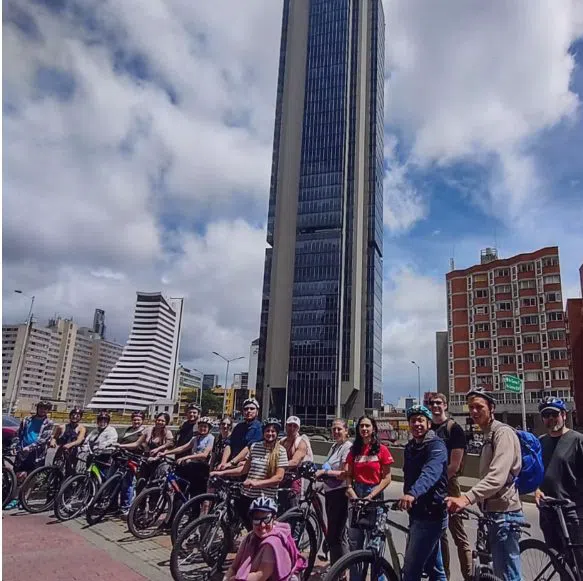
Bogotá sits at 2,640 metres, its air thin and its afternoon light impossibly clean, and on any given Sunday morning it does something almost no other capital manages: it hands its own streets back to bicycles. Over 500km of dedicated ciclorrutas thread through the city year-round, but the real proof of the boom is what happens when you actually ride here — the graffiti alleys of La Candelaria, the lung-burning climb toward the eastern hills, a colonial-village flea market reached entirely by bike lane. This is a 48-hour plan for seeing Bogotá the way locals do: from the saddle.
Saturday morning: riding the historic centre
Start where every serious Bogotá cycling trip starts — with a guided loop of La Candelaria, the colonial core where cobbled streets, government buildings and street art collide within a few blocks of each other.
Bogotá Bike Tours (La Candelaria) is the original operator here, and it shows in how little friction there is: fixed daily group departures at 10:30 and 1:30 need no reservation, you just show up, and prices run COP 15,000–285,000 (roughly US$4–75) depending on which tour you pick. The standard ride mixes Plaza de Bolívar, graffiti alleys, a coffee-roasting stop and a fruit market, and stronger riders can upgrade to the high-altitude Verjón route if they want more than a flat city loop. It suits solo travellers and groups equally well — you'll likely be riding alongside strangers from four different countries by the second stop, since the fixed slots pool everyone together.
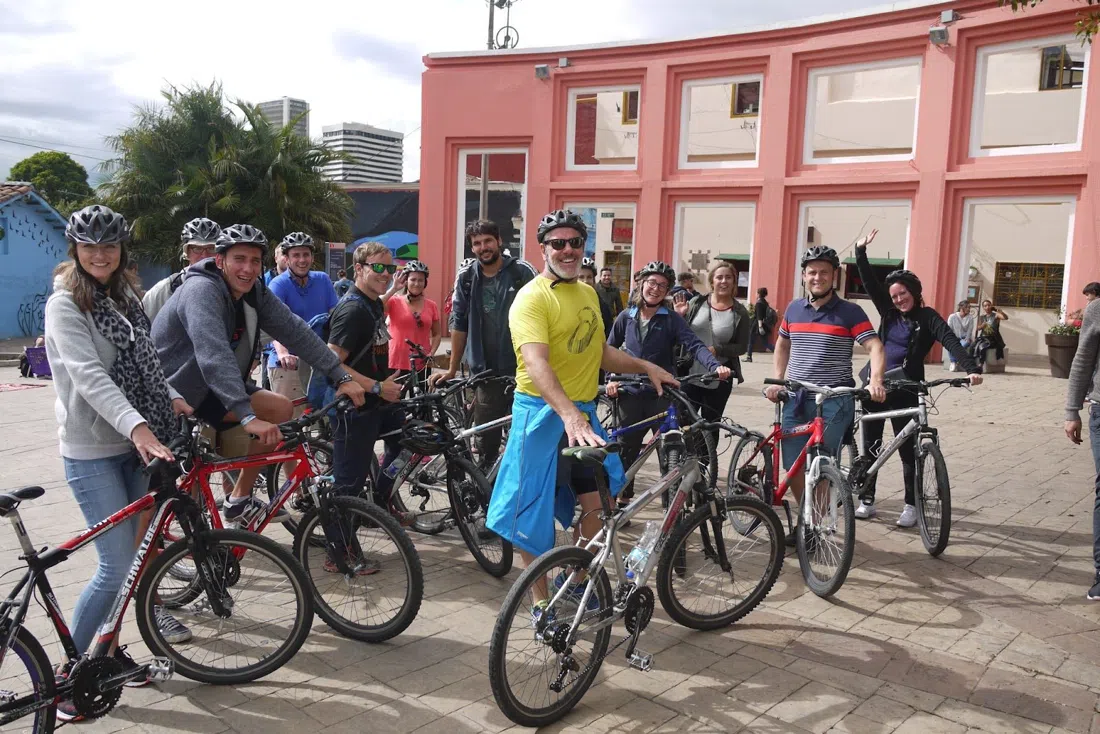
Bogotravel Tours (La Candelaria) covers similar ground — historic centre, graffiti, a market stop — but adds a bakery visit, and runs its own daily small-group departures plus private bookings at roughly US$30–45 per tour. With 875-plus reviews on record it's a legitimate second opinion rather than a knockoff: worth booking if Bogotá Bike Tours' fixed slots don't match your schedule, or if you'd rather pre-book a smaller group than take whoever shows up at 10:30.
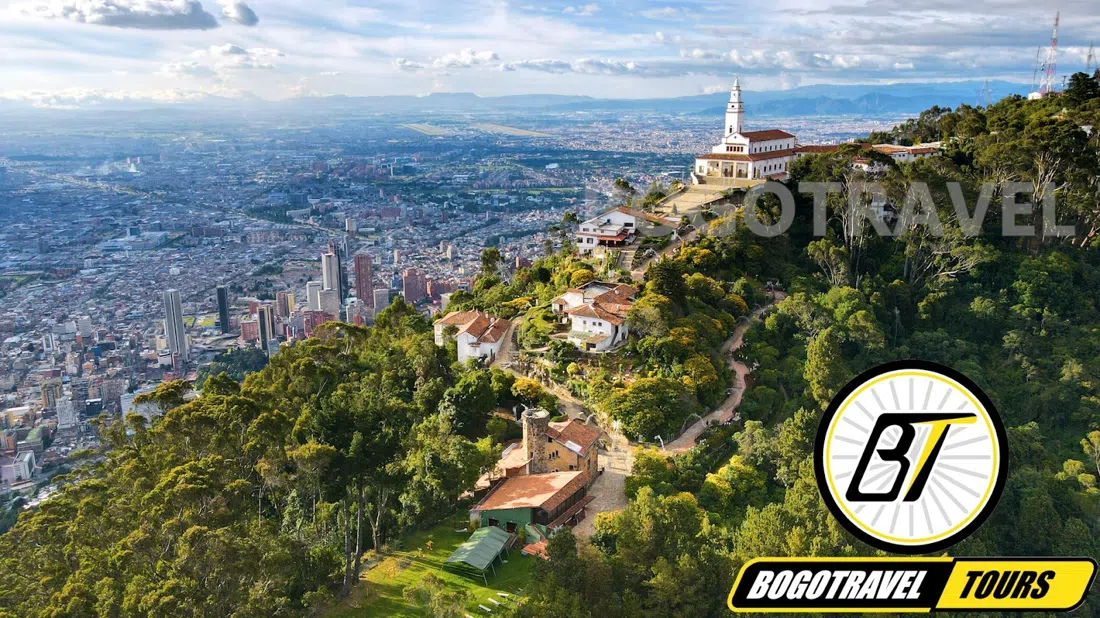
For the graffiti itself, go deeper with Capital Graffiti Tours (La Candelaria), run not by tour guides but by working street artists. Groups are kept small, and the 13km graffiti-district ride — roughly COP 90,000–150,000 (US$22–38) — comes with real context on the Comuna-style murals rather than a rehearsed script. Private bookings and workshop sessions are available if you want to talk technique rather than just look. This is the one to pick if you actually care about the art and not just the photo.
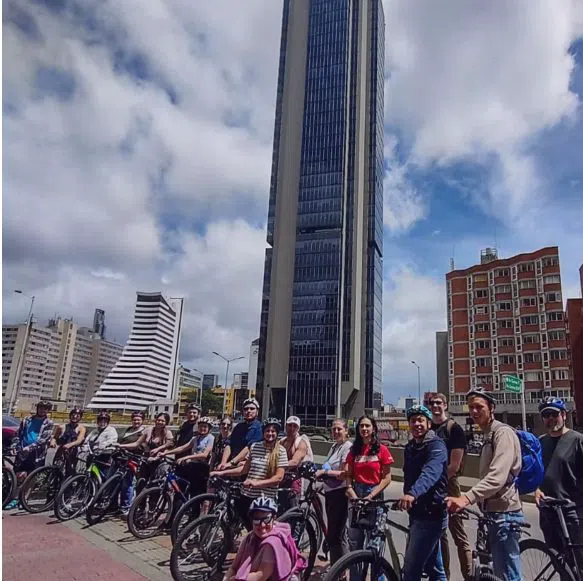
None of these three centre-based operators gatekeep the standard tours — you don't need to be part of a pre-formed group, and couples travelling alone will simply join whoever else is on that slot. Where it gets more selective is the add-ons: Capital Graffiti Tours' workshops and any operator's private bookings need a message or call ahead, since those run on request rather than a fixed schedule.
Saturday afternoon: the mellow lane
Not every hour of a Bogotá cycling trip needs to be a guided tour or a climb. For a slower Saturday afternoon, Rueda Bogotá (Teusaquillo) is the antidote to the Candelaria operators' bigger crowds: a family-run, owner-run outfit whose tours can be customised to fitness level and end, characteristically, with fresh juice — sometimes yoga. Expect to pay roughly US$20–35 for a rental or guided tour. It suits couples or anyone who wants a genuinely relaxed pace rather than a checklist ride, and small groups make it easy to actually talk to your guide. Note there's no live official booking domain at the time of writing — go through current TripAdvisor listings or their Instagram, which is where activity is verified.
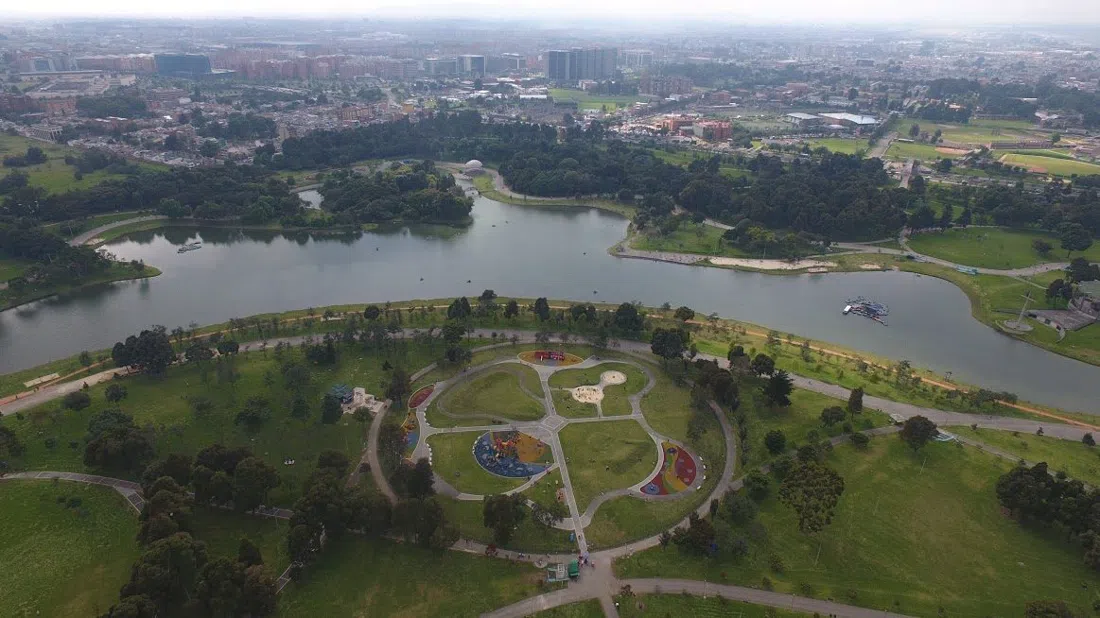
Pair that with Parque Simón Bolívar (Salitre), the flattest, easiest stretch of riding in the city. It's a free public park with bike rental available on-site or nearby (around US$10–15 for a half day), and the loop naturally extends to the Botanical Garden and the Virgilio Barco library if you want to turn a bike ride into a half-day out. This is where you send anyone in your group who's had enough of hills for one day, and it's an easy solo afternoon too — no group needed to rent or ride.
If your evening still has energy in it, Bogotá's cycling culture has a genuinely offbeat, photogenic side worth seeking out: Hard Court Bike Polo Bogotá, which plays across rotating courts on set weeknights and explicitly welcomes newcomers, whether you want to play or just watch. It's free to spectate, gear is often loanable to first-timers, and the club has hosted a Latin American championship and keeps a running league going. Worth timing your Saturday evening around if the schedule lines up — it's the clearest evidence that cycling here goes well beyond commuting and the Sunday ritual everyone talks about.
Sunday: the reason this guide exists
Everything on Saturday is a warm-up for Sunday, when Bogotá does the thing it's actually famous for. Ciclovía — the Sunday Ciclovía de Bogotá — closes over 120km of city streets to cars every Sunday from 7am to 2pm, for free, with no booking and no barrier to entry beyond showing up with a bike. It has run for decades and is still running weekly in 2026. This is not optional colour for a 48-hour cycling guide to this city — it's the centre of gravity the whole trip should be built around. Arrive early, before the main roads thicken with riders, joggers and the free aerobics classes that pop up along the route, and head north.
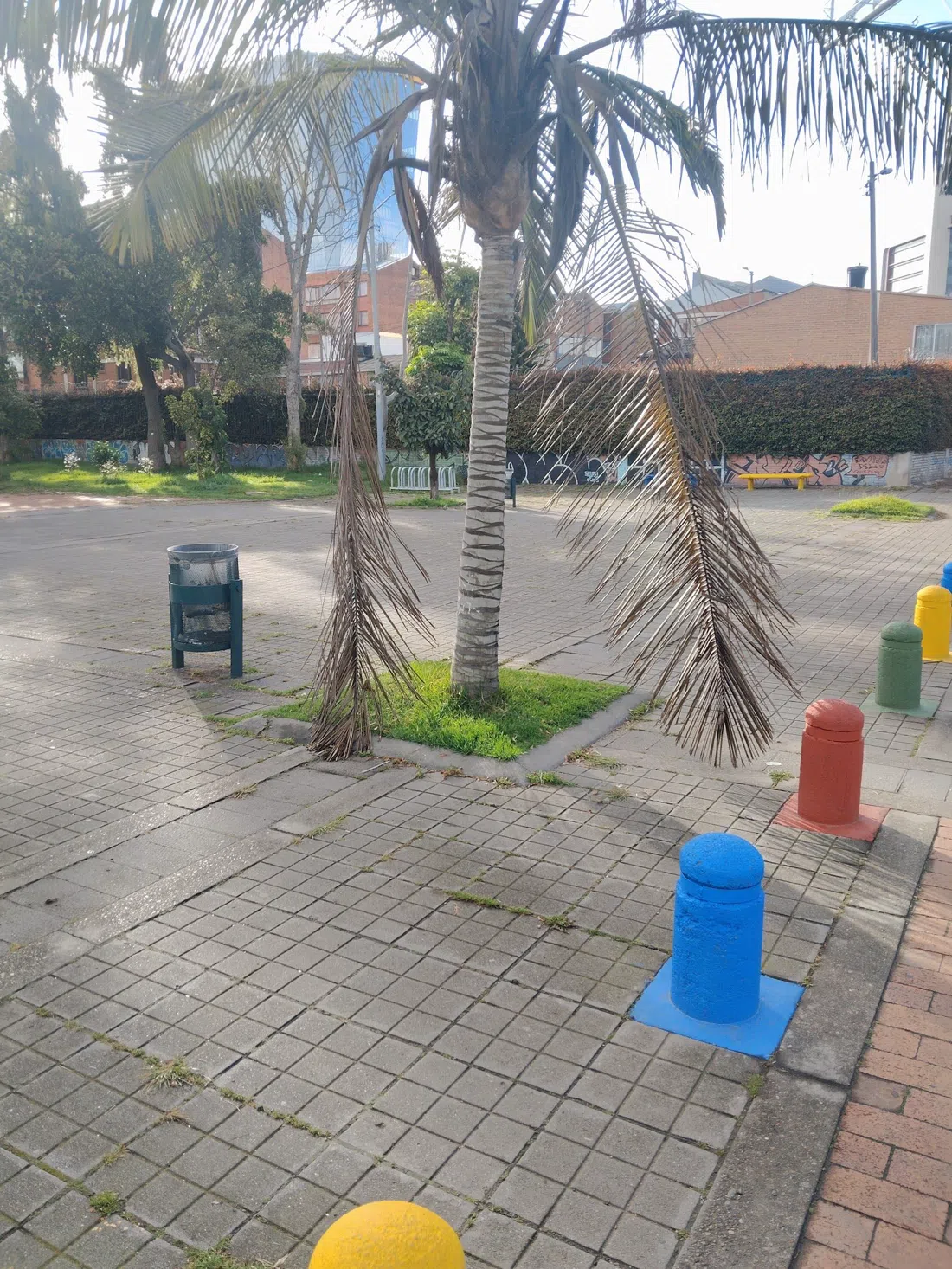
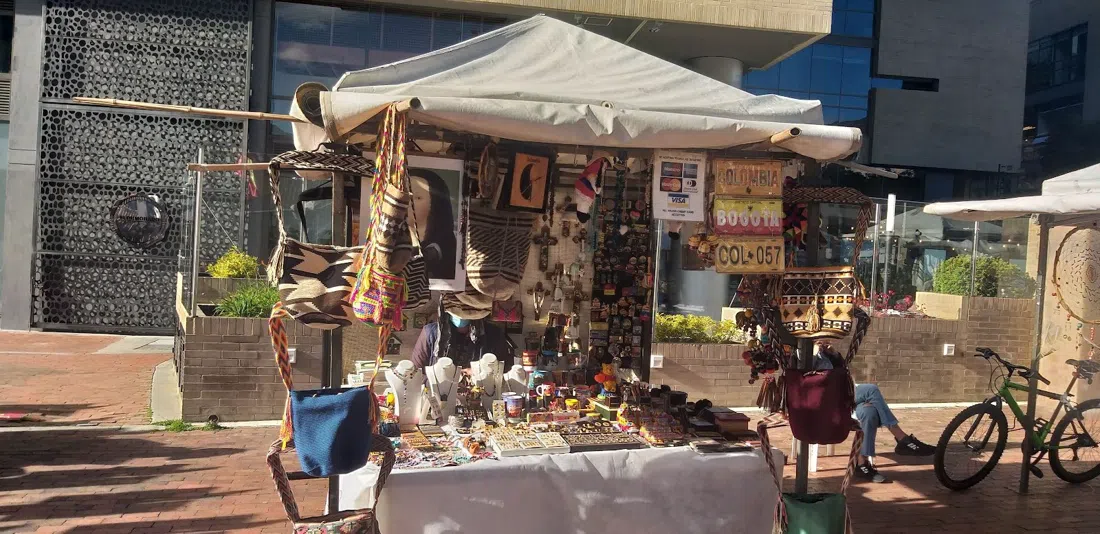
The natural destination for a Ciclovía ride is the Usaquén Sunday Flea Market (Usaquén), reachable entirely via the closed bike lanes and worth the distance for its cobbled, colonial-village charm and food stalls. It's free to browse, goods vary stall to stall, and it makes a genuinely satisfying turnaround point — ride up, wander the market, eat something, ride back. Groups spread out naturally here since there's no fixed itinerary, which makes it easy for a mixed-ability crew to regroup afterward, and it's just as pleasant solo.
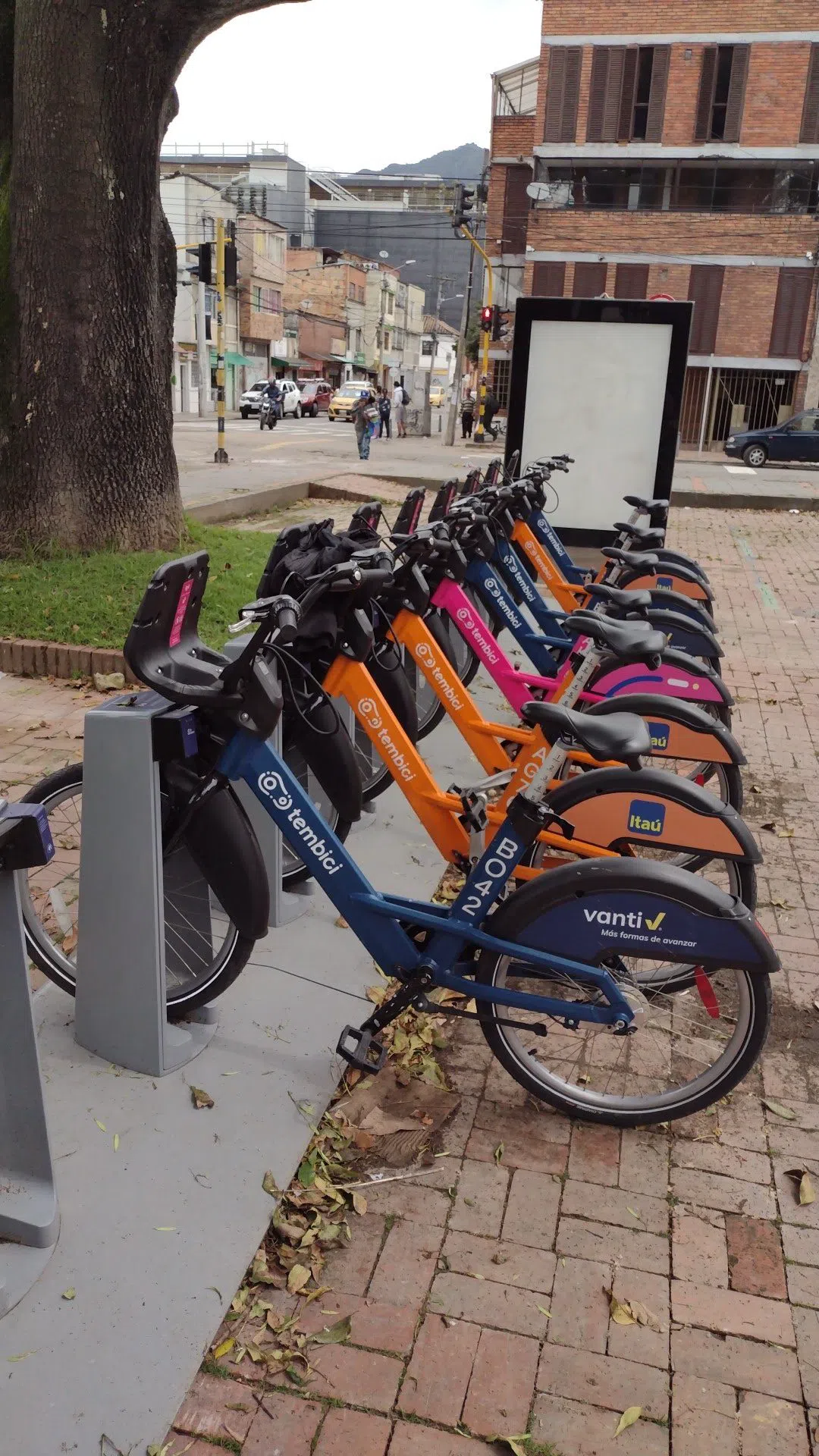
If you're not renting for the day, Bogotá's public bike-share system, TemBici Bogotá bike share, covers the gap efficiently: self-serve via app, single rides for a few thousand COP or a monthly pass around COP 34,650 (roughly US$9.44). It runs across more than 300 stations spanning Usaquén, Chapinero, Santa Fe and Candelaria, including e-bikes and accessible handbikes, and it's been running reliably since 2022. It's not a tour and won't teach you anything about the city, but for Sunday-morning Ciclovía logistics — grab a bike near your hotel, dock it near the market, grab another for the ride back — it's the most practical option on this list.
Sunday afternoon: for the serious cyclist
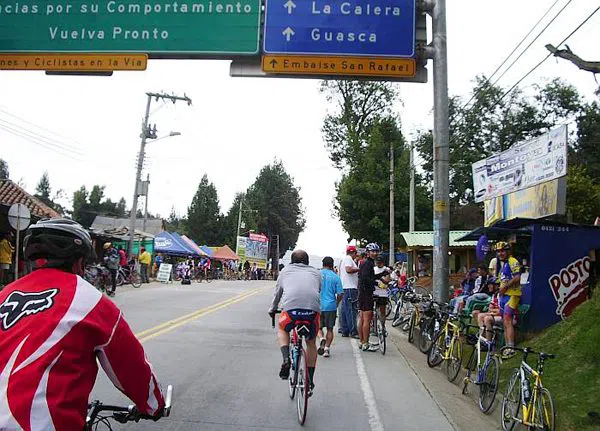
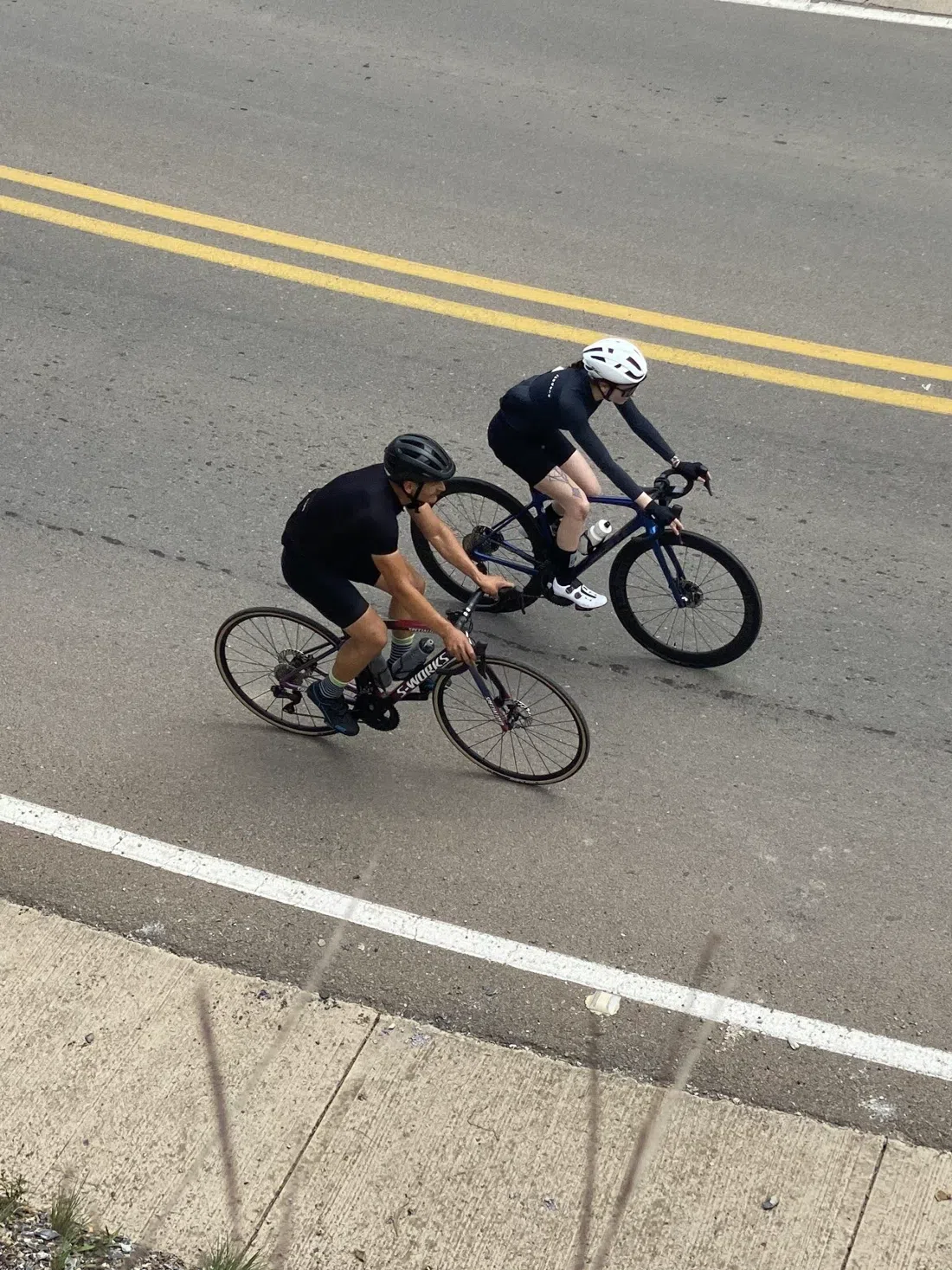
Once Ciclovía closes at 2pm, the city's road-cycling culture takes over, and this is where the 48 hours earns its billing as more than a tourist loop. Alto de Patios, above Chapinero on the road toward La Calera, is the pilgrimage climb every Bogotano cyclist eventually rides — 6.4km up to nearly 3,000 metres, with a dedicated cyclist-only lane every Sunday and genuine roadside camaraderie the whole way up. It's free to ride, on a public road, entirely self-directed, and a few thousand COP at the summit gets you a snack and the view. This is not a casual afternoon out — expect thin air and a real gradient, and give yourself a day or two in the city before attempting it if you've flown in from sea level — but it's also not gatekept: anyone with a road bike and functioning lungs can join the procession.
To do it properly, you need the right bike, and that's where Colombian Road Heights comes in — a family-run, premium-tier operation that delivers proper road bikes to your hotel for private or small-group guided rides, roughly US$40–90 for a rental or guided day. This is the outfit to book if you're serious about riding Patios, Alto del Vino or El Verjón rather than just seeing them from a car window on the way to a viewpoint. Book ahead: hotel delivery means they need lead time, and this isn't a walk-up operator like the Candelaria tour groups.
A grounded stop for cycling history
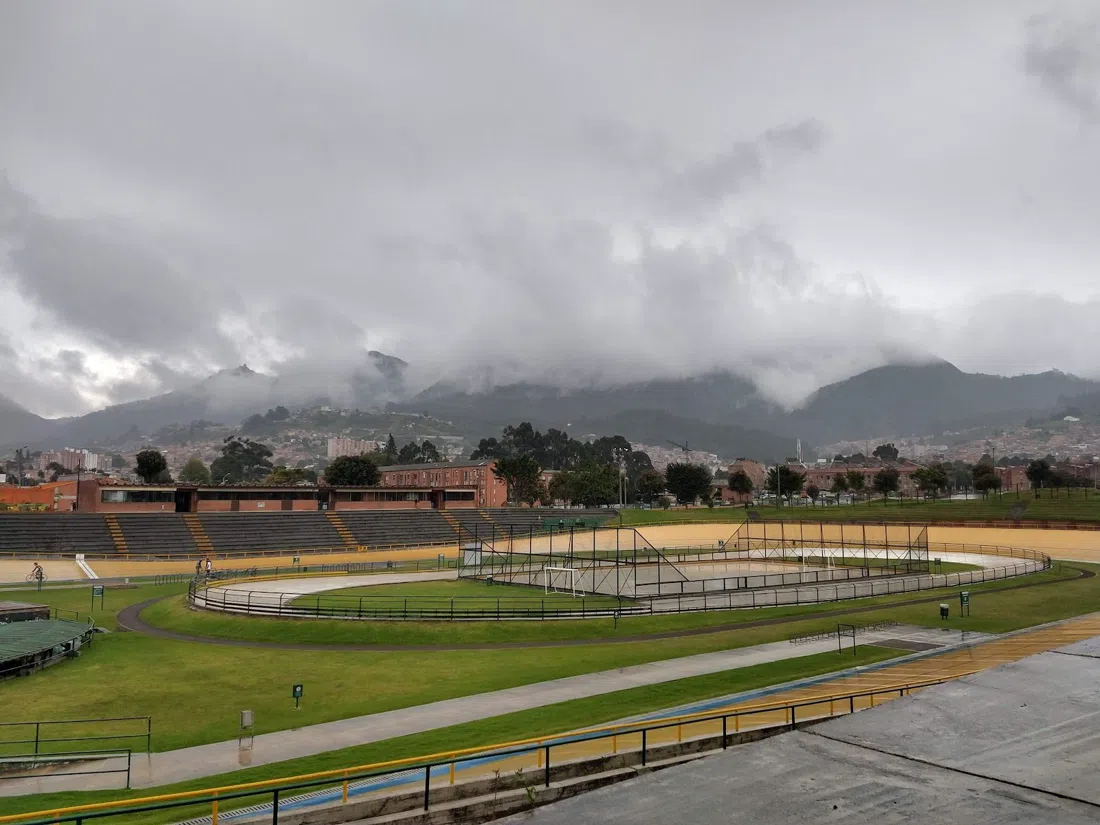
Before you leave, if you have an hour spare and want context rather than another climb, Velódromo Primero de Mayo, in south Bogotá, is Colombia's oldest track-cycling venue, dating to 1951, where Eddy Merckx once raced. It's now a protected heritage site with an active BMX track alongside it, free to visit, and training sessions are usually open to watch. It's a quieter, unglamorous stop compared to Ciclovía or Patios, but it's the piece of the story that explains why this city takes cycling as seriously as it does — this wasn't built in the last decade, it's been here since before most of the city's current cyclists were born.
Practical notes
Transport: Beyond your own two wheels, Bogotá's TransMilenio bus rapid transit and metered taxis or ride-hail apps cover the gaps — useful if you're moving bike-tour gear across town outside Ciclovía hours, or if the altitude catches up with you sooner than expected.
Cash: Carry small COP notes. Tour operators generally take cards, but market stalls at Usaquén, snack vendors at the top of Alto de Patios and small juice stops often won't.
Timing: Ciclovía runs every Sunday, 7am–2pm, rain or shine — build the whole weekend around that window rather than trying to squeeze it in. Bogotá Bike Tours runs fixed daily slots at 10:30 and 1:30; Capital Graffiti Tours, Colombian Road Heights and Rueda Bogotá's private options should be booked ahead since they work in small groups or by arrangement.
Budget: A full 48 hours can run from barely anything — Ciclovía and Parque Simón Bolívar are free, TemBici passes cost a few dollars — up to US$150–200 if you add a private graffiti tour, a full day with Colombian Road Heights and a couple of guided city rides. Either end of that range gets you the real city, not a diluted version of it.
Where to sleep: Base yourself near La Candelaria or Chapinero for easy access to both the historic-centre tours and the Sunday climb — start your search with this Bogota hotel search, and for the rest of what the city offers beyond cycling, the full Bogota guide is the place to plan around it.